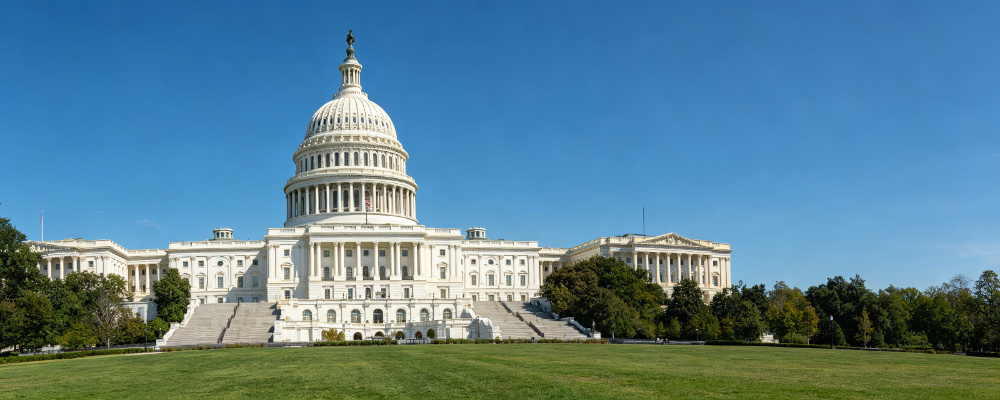
Country Profile
Capital and Key Business Cities
- Capital: Washington, D.C.
- Key business cities: New York, Los Angeles, Chicago, San Francisco Bay Area, Seattle, Boston, Dallas, Houston, Atlanta, Miami.
Official Language and Currency
- No federal official language; English is the de facto language of business and administration. Some states and territories have additional language rules.
- Currency: U.S. Dollar (USD).
Time Zones
- The continental U.S. covers Eastern, Central, Mountain, and Pacific Time, plus Alaska, Hawaii-Aleutian, and overseas territories. Multi-state employment requires clear time zone and payroll cutoff rules.
Population and Labor Force
- U.S. population is approximately 340 million (Source: U.S. Census Bureau current-year population estimates).
- The labor market is highly flexible and regulated at both federal and state levels. Union coverage is around 10% overall, but union influence is significant in public sector, transportation, construction, entertainment, and healthcare (Source: U.S. Bureau of Labor Statistics current-year union data).
Key Industries
- Technology, finance, healthcare, professional services, manufacturing, energy, agriculture, logistics, retail, entertainment, and education.
Economic and Legal Environment
- The U.S. is a federal system. Employment rules arise from federal law, state law, local ordinances, and case law.
- Key federal agencies: U.S. Department of Labor (DOL), Equal Employment Opportunity Commission (EEOC), National Labor Relations Board (NLRB), Occupational Safety and Health Administration (OSHA).
- Tax authority: Internal Revenue Service (IRS).
- Immigration authorities: U.S. Citizenship and Immigration Services (USCIS), Department of State (DOS), and DOL wage and labor certification units.
Local Jurisdiction Differences
- Minimum wage, paid sick leave, paid family leave, pay transparency, background checks, non-compete, leave, whistleblower protection, and pay stub requirements vary significantly by state and city.
- Key jurisdictions: California, New York, New York City, Washington, Colorado, Illinois, Massachusetts, New Jersey, Texas, Florida.
Foreign Workforce and Remote Work
- Foreign nationals generally need a work visa or work authorization; employers must complete Form I-9 employment eligibility verification.
- Remote work may trigger multi-state tax, payroll withholding, workers' compensation, paid leave, and employment law issues.
Risks for Foreign Employers
- High-risk areas include worker misclassification, multi-state wage-hour compliance, pay transparency, background checks, privacy, non-compete, immigration compliance, employee benefits (ACA, ERISA), and collective bargaining.
- Consult U.S. employment counsel, tax advisors, and licensed immigration counsel before hiring, terminating, restructuring, granting equity, or managing cross-border remote work.
Labor Regulations
Core Legal Framework
- Federal laws: Fair Labor Standards Act (FLSA), Title VII of the Civil Rights Act, Americans with Disabilities Act (ADA), Age Discrimination in Employment Act (ADEA), Family and Medical Leave Act (FMLA), Occupational Safety and Health Act (OSH Act), National Labor Relations Act (NLRA), Immigration Reform and Control Act (IRCA), Employee Retirement Income Security Act (ERISA), Affordable Care Act (ACA), Genetic Information Nondiscrimination Act (GINA), Pregnancy Discrimination Act.
- State and local laws: state labor codes, wage orders, paid leave laws, pay transparency laws, background check laws, privacy laws, and non-compete statutes.
Employment Standards and Anti-Discrimination
- Discrimination is prohibited based on race, color, religion, sex, national origin, age, disability, genetic information, pregnancy, and other protected characteristics.
- Many states and cities add protections for sexual orientation, gender identity, marital status, family responsibilities, criminal records, and salary history.
Anti-Harassment and Equal Employment
- Employers should maintain anti-harassment policies, complaint channels, and training. Some states mandate harassment prevention training.
Occupational Health and Safety
- Employers must comply with OSHA or an approved State Plan, provide a safe workplace, training, recordkeeping, and injury reporting.
Privacy and Background Checks
- The federal Fair Credit Reporting Act (FCRA) governs third-party background checks; some states impose stricter rules, such as California, New York, and Washington.
- Interview questions must avoid protected characteristics; background checks require authorization and disclosure.
Minimum Wage
- Federal minimum wage is $7.25 per hour (Source: U.S. Department of Labor, FLSA).
- State and city minimum wages may be higher. Verify current-year rates by state/city.
Wage Payment and Pay Stubs
- FLSA requires payment of at least minimum wage and overtime. Pay stub requirements are set by state law and typically include pay period, hours, rates, deductions, and net pay.
Hours, Breaks, and Overtime
- FLSA generally requires 1.5 times the regular rate for hours over 40 per workweek for non-exempt employees.
- Rest and meal breaks are governed by state law; federal law does not require paid rest breaks.
Public Holidays
- Federal holidays apply to federal employees and D.C.; private employers are not required to provide paid holidays unless required by contract, policy, or state law.
Vacation and Sick Leave
- Federal law does not require paid vacation. Some states and cities require paid sick leave.
Probationary Periods
- No federal probation requirement; most states follow at-will employment, with exceptions such as Montana.
Fixed-Term Contracts
- Permitted, but consider state law and benefit eligibility.
Confidentiality, IP, and Non-Compete
- Confidentiality and IP ownership are typically contractual. Non-compete is unenforceable or heavily restricted in states such as California, Minnesota, Oklahoma, and North Dakota.
Labor Inspection, Penalties, and Recordkeeping
- DOL Wage and Hour Division, OSHA, and EEOC may investigate and assess penalties. FLSA requires payroll and hour records, generally for at least 3 years.
Tip
- U.S. employment law is highly localized. Verify state, city, and industry rules before implementation.
Public Holiday
Federal Holidays (Current Year)
- Federal holidays apply to federal employees and D.C. Private employers are not required to provide paid holidays unless required by policy, contract, or state law.
| Holiday | Date | Applicability | Paid | Work Rules |
| New Year's Day | January 1 | Federal | Paid for federal employees | Private employer discretion |
| Martin Luther King Jr. Day | Third Monday in January | Federal | Paid for federal employees | Private employer discretion |
| Washington's Birthday | Third Monday in February | Federal | Paid for federal employees | Private employer discretion |
| Memorial Day | Last Monday in May | Federal | Paid for federal employees | Private employer discretion |
| Juneteenth | June 19 | Federal | Paid for federal employees | Private employer discretion |
| Independence Day | July 4 | Federal | Paid for federal employees | Private employer discretion |
| Labor Day | First Monday in September | Federal | Paid for federal employees | Private employer discretion |
| Columbus Day | Second Monday in October | Federal | Paid for federal employees | Private employer discretion |
| Veterans Day | November 11 | Federal | Paid for federal employees | Private employer discretion |
| Thanksgiving Day | Fourth Thursday in November | Federal | Paid for federal employees | Private employer discretion |
| Christmas Day | December 25 | Federal | Paid for federal employees | Private employer discretion |
State and Local Holidays
- States and cities may add holidays, such as Cesar Chavez Day in California or Election Day in New York. Floating or proclaimed dates must be verified with official announcements.
Holiday Work Pay
- Federal law does not require holiday premium pay; overtime is still calculated under FLSA. State law or contract may require holiday pay or compensatory time.
Categories of Worker
Indefinite Employment
- Most U.S. employment is at-will unless a contract, union agreement, or state law provides otherwise.
- Either party may generally terminate at any time, but not for illegal reasons such as discrimination or retaliation.
Fixed-Term Contracts
- Permitted, common for projects, seasonal work, academia, and temporary replacement.
- Expiration generally is not a termination, but consider benefits and state law.
Part-Time
- Hourly or fewer weekly hours than full-time. FLSA overtime applies over 40 hours/week. ACA full-time is generally 30 hours/week or 130 hours/month.
Temporary Workers
- May be employed by a staffing agency and assigned to a client. Evaluate joint employment risk.
Staffing/Employee Leasing
- Staffing agencies are often the legal employer, but clients may share joint employment liability.
Independent Contractors
- Classification is determined under IRS and state law. Misclassification can lead to back taxes, penalties, benefits, and litigation.
Freelancers
- Project-based, usually under an independent contractor agreement.
Interns
- Must meet FLSA internship exemption criteria; otherwise minimum wage and overtime apply.
Apprentices
- Common in construction, manufacturing, and skilled trades; governed by Registered Apprenticeship rules.
Project-Based Workers
- Fixed-term or independent contractor.
Remote Employees
- May trigger multi-state tax, payroll, workers' compensation, and leave compliance.
EOR/PEO
- EOR suits employers without a U.S. entity; PEO suits existing entities outsourcing HR. Clarify joint employment, benefits, and tax responsibilities.
Risk Alert
- Misclassification, disguised outsourcing, joint employment, and multi-state compliance are high-risk areas.